

Budaya & Tradisi Bali
Bali lebih dari pantai indah — ini adalah permadani hidup tradisi Hindu-Bali, pura sakral, upacara penuh warna, dan filosofi harmoni.
Bali's temples are the spiritual heart of the island. Here are some of the most significant ones you can visit.
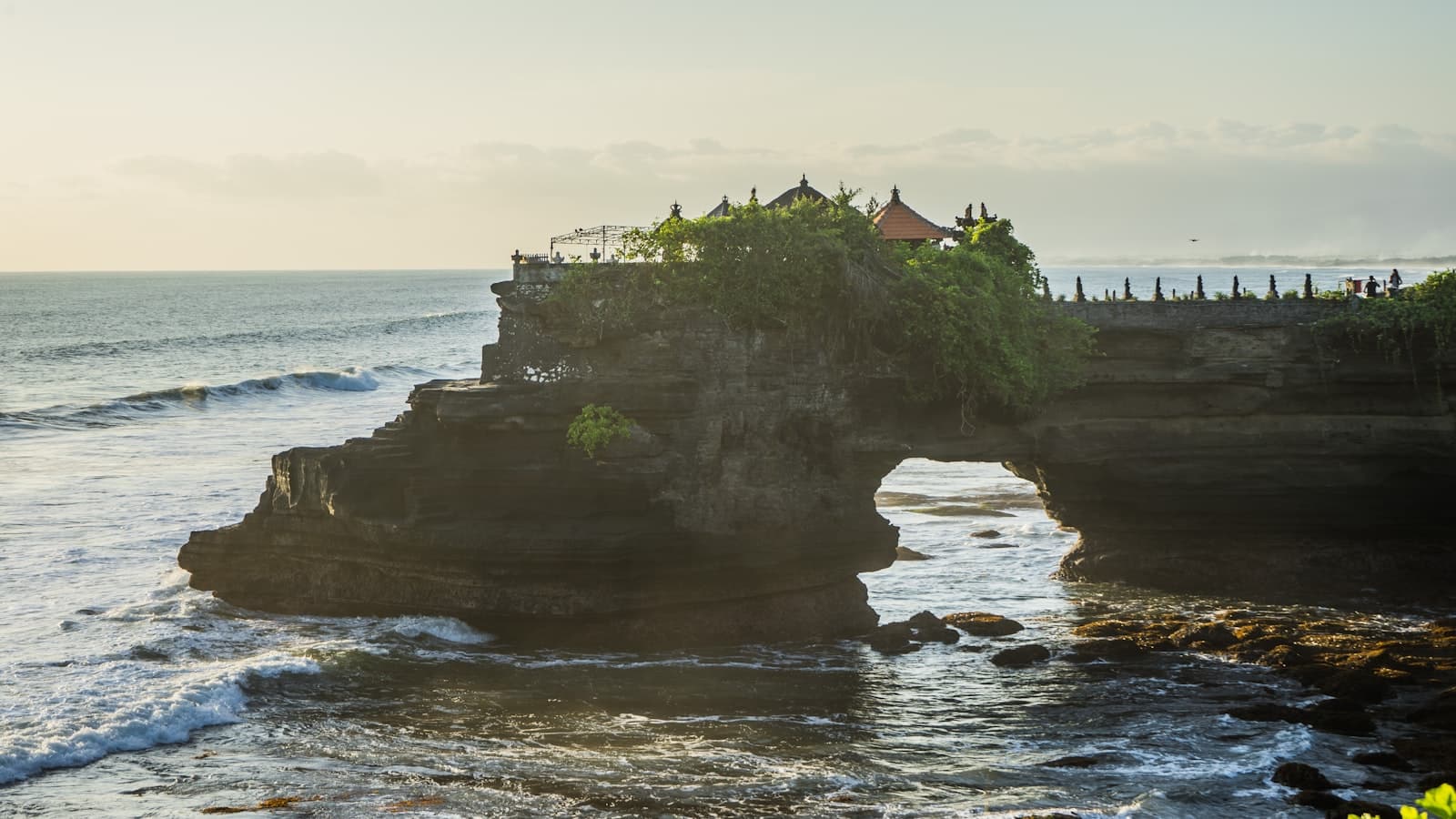
Tanah Lot. Slide 1 dari 7
Hari Raya Nyepi
March (Balinese New Year, Saka calendar)
Bali's most unique holiday — the entire island shuts down for 24 hours. No lights, no travel, no activity. The night before, giant ogoh-ogoh monster statues parade through streets to chase away evil spirits.
What to expect: Airport closes, streets empty, hotels ask guests to stay indoors. A surreal and deeply moving experience.
Hari Raya Galungan & Kuningan
Every 210 days (Balinese Pawukon calendar)
Bali's most important recurring festival celebrating the victory of good (dharma) over evil (adharma). Families decorate bamboo penjor poles along every road, creating magical corridors of offerings.
What to expect: Streets lined with penjor poles, families in traditional dress visiting temples, elaborate offerings everywhere.
Hari Raya Saraswati
Every 210 days (Saturday of the last week of Pawukon)
Dedicated to the Hindu goddess of knowledge, arts, and learning. Books, texts, and educational tools receive offerings. Students and scholars celebrate with prayers and ceremonies.
What to expect: Offerings on books and computers, ceremonies at schools and temples, traditional dress.
Hari Raya Pagerwesi
Wednesday following Saraswati (every 210 days)
Meaning 'iron fence,' this ceremony strengthens spiritual fortification against evil forces. Balinese pray for mental and spiritual strength to protect their families.
What to expect: Temple ceremonies, offerings at home shrines, a more local and intimate experience compared to Galungan.
Odalan
Varies — each temple celebrates every 210 days
Every Balinese temple celebrates its anniversary with elaborate multi-day ceremonies. With over 20,000 temples across Bali, there's almost always an odalan happening somewhere on the island.
What to expect: Colorful decorations, gamelan music, traditional dance, processions of women carrying towering fruit offerings.
Purnama & Tilem
Monthly — following the lunar calendar
Full moon (Purnama) and new moon (Tilem) are important prayer days. Temples are more active, and Balinese families visit their local temples to make offerings and pray.
What to expect: Increased temple activity, offerings at shrines, traditional clothing. Full moon nights at seaside temples are particularly atmospheric.